
Common interior of one associated with the houses in the particular Folk Architecture Reservation within Vlkolínec (Slovakia)During the past, interiors were put together naturally as a part of the process of building.[1] The career of interior design offers been a consequence of the development of society plus the complex architecture that will has resulted from your advancement of industrial processes. The pursuit of effective using space, user well-being plus functional design has added to the development of the particular modern-day interior design profession. The particular profession of interior style is separate and unique from the role of interior decorator, a term commonly used in the particular US. The term will be less common in the UK in which the profession associated with interior design is still unregulated and therefore, strictly speaking, not yet officially a profession.In ancient Indian, architects used to work because interior designers. This can be seen from the references of Vishwakarma the architect : one of the gods in Indian mythology. In addition, the sculptures depicting historic texts and events are seen in palaces constructed in 17th-century India.Within ancient Egypt, "soul houses" or models of houses were placed in tombs as receptacles for meals offerings. From these, this is possible to detect details about the interior style of different residences all through the different Egyptian dynasties, such as changes in air flow, porticoes, columns, loggias, home windows, and doors.[2]Throughout the 17th and 18th millennium and into the earlier 19th century, interior design was your concern of the homemaker, or an utilized upholsterer or craftsman who else would advise on the artistic style for a good interior space. Architects would also employ craftsmen or even artisans to complete inside design for their structures.Commercial interior design plus administrationIn the mid-to-late 19th century, interior style services expanded greatly, since the middle class in industrial countries grew in dimensions and prosperity and began to desire the domestic trappings of wealth in order to cement their new position. Large furniture businesses began to branch out in to general interior design and management, offering full house furnishings in a number of styles. This particular business model flourished from the mid-century to 1914, when this role was increasingly usurped by impartial, often amateur, designers. This particular paved the way regarding the emergence from the professional interior design in the particular mid-20th century.[3]Illustrated catalog of the Wayne Shoolbred Company, published in 1876.In the 1950s and sixties, upholsterers started out to expand their business remits. These people framed their business a lot more broadly and artistic words and commenced to promote their furnishings to the public. To meet the developing demand for contract interior work on projects such as offices, hotels, and public buildings, these businesses became much larger and more complex, employing builders, joiners, plasterers, textile designers, performers, and furniture designers, as well as engineers and technicians in order to fulfil the job. Firms started out to publish plus circulate catalogs with prints for different lavish designs to attract the interest associated with expanding middle classes.[3]As department stores improved in number and size, retail spaces within shops were furnished in different styles as examples for clients. One particularly effective advertising tool was to established up model rooms in national and international exhibitions in showrooms for your general public to see. Some associated with the pioneering organizations within this regard were Waring as well as Gillow, James Shoolbred, Mintons, and Holland & Sons. These traditional top quality furniture making organizations started out to play an important role as advisers to unsure middle class customers on taste and style, and started taking out agreements to design and provide the interiors of many essential buildings in Britain.[4]This type of company emerged in America after the Civil War. The particular Herter Brothers, founded simply by two German emigre siblings, commenced as an upholstery warehouse and became one of the first companies of furniture makers and interior decorators. Using their own design office plus cabinet-making and upholstery workshops, Herter Brothers were ready to accomplish every aspect associated with interior furnishing including decorative paneling and mantels, walls and ceiling decoration, patterned floors, and carpets plus draperies.[5]Illustration through The Grammar of Ornament (1856), by interior designer Owen Jones.A crucial figure in popularizing theories of interior design to the middle class was the architect Owen Jones, 1 of the most influential design theorists of the nineteenth century.[6] Jones' first project had been his most important—in 1851 he was accountable for not only the decoration of Joseph Paxton’s gigantic Amazingly Palace for that Great Exhibit, but also for the arrangement of the exhibits within. He chose the controversial palette of red, yellow, and blue regarding the interior ironwork and, despite initial negative advertising in the newspapers, was eventually unveiled by Queen Victoria to much critical acclaim. His most important publication was The Grammar of Ornament (1856),[7] in which Jones formulated 37 key principles of interior design and decor.Jones was employed simply by some of the leading home design organizations of the day; in the 1860s he worked in collaboration with the London company Jackson as well as Graham to produce furniture and other fittings for high-profile clients including art collector Alfred Morrison and the Khedive of Egypt, Ismail Pasha.In 1882, the London Directory of the Write-up Office listed 80 interior decorators. Probably the most distinguished businesses of the period had been Crace, Waring and Gillow and Holland as well as Kids; famous decorators employed by these types of companies included Thomas Edward cullen Collcutt, Edward William Godwin, Charles Barry, Gottfried Semper, and George Edmund Road.[8]Transition to expert interior design
Related Images with 3d Home designs layouts Android Apps on Google Play
Make 3d House Design Model \u2014 Stylid Homes

Indian Simple House Design brucall.com

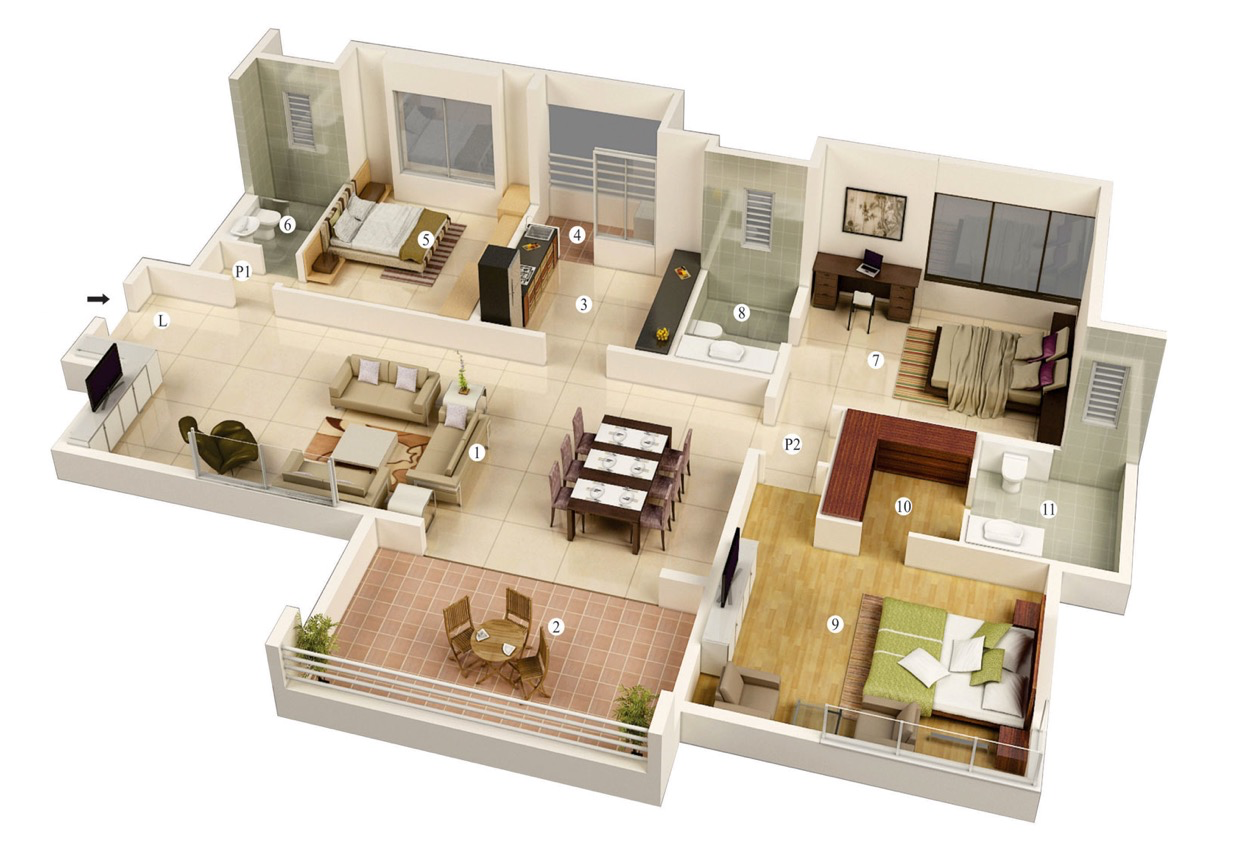
25 More 3 Bedroom 3D Floor Plans
![]()


Komentar
Posting Komentar